Project ODIN: advancing environmental genomic surveillance for public health across sub-Saharan Africa.
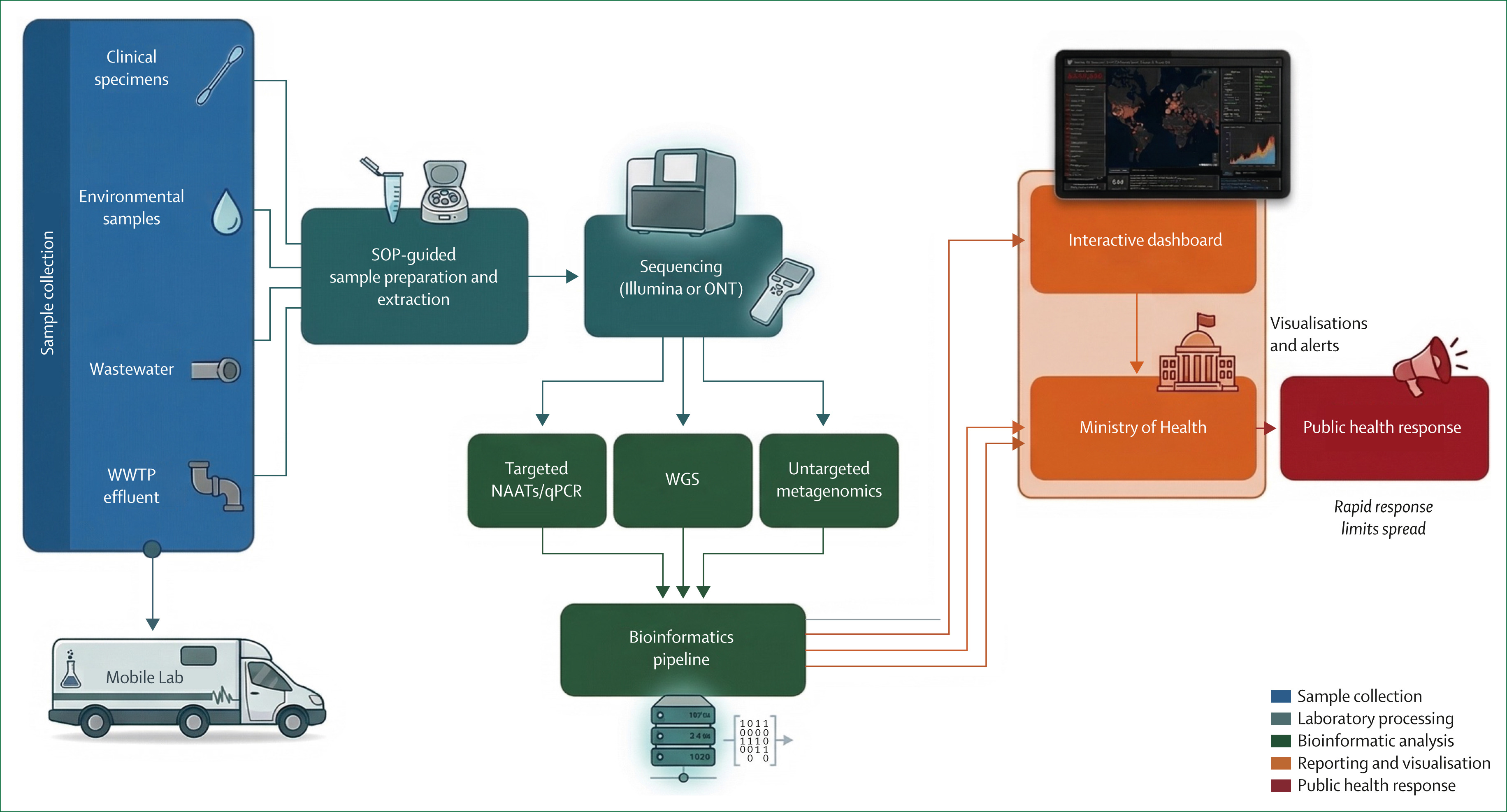
This publication showcases the ODIN project’s work in advancing environmental genomic surveillance across sub-Saharan Africa. The paper outlines how integrating metagenomics, wastewater surveillance, and mobile laboratory systems can enable near real-time detection of pathogens and generate actionable insights for public health decision-making. Through its implementation in countries including Tanzania, Burkina Faso, and the Democratic Republic of Congo, ODIN is demonstrating how genomic technologies can strengthen outbreak preparedness, improve detection of priority pathogens, and support monitoring of antimicrobial resistance.
CLICK HERE TO READ THE FULL PAPER.
Harnessing genomic and bioinformatics for surveillance of pathogens in Africa: a scoping review of existing training and gaps in training.
This review provides a comprehensive overview of genomics and bioinformatics training initiatives supporting pathogen surveillance across Africa. It highlights significant progress in capacity building over the past decade, while identifying persistent challenges including limited infrastructure, shortages of skilled personnel, and the need for sustainable, long-term training programmes. The findings emphasise the importance of strengthening local expertise, embedding training within academic and public health institutions, and aligning capacity-building efforts with surveillance system needs to support outbreak preparedness and response.
CLICK HERE TO READ THE FULL PAPER.
Towards a Framework for the Successful Implementation of Wastewater and Environmental Surveillance for Diarrhoeal Diseases in Sub-Saharan Africa.
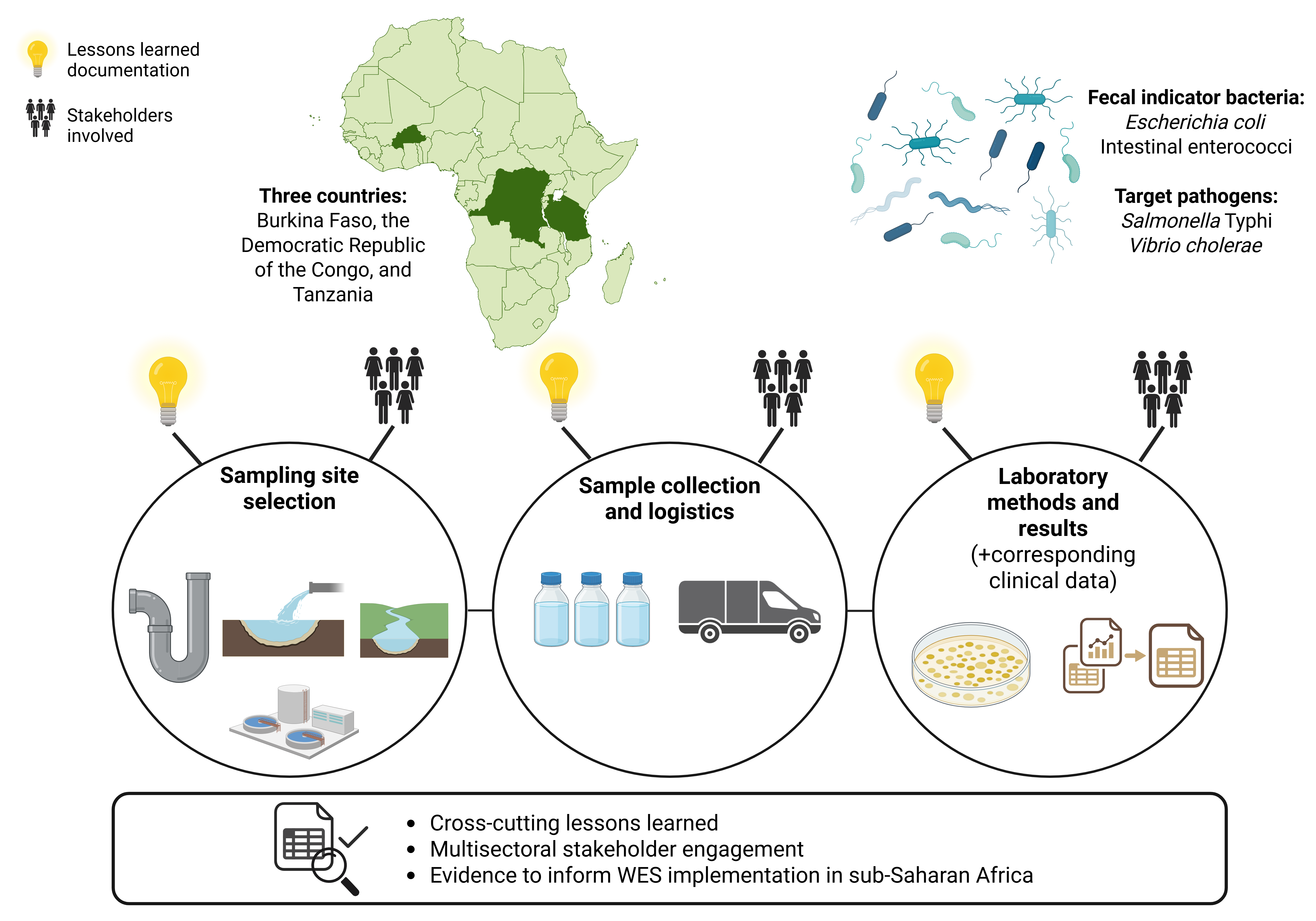
Diarrhoeal diseases remain a major public health challenge in sub-Saharan Africa, prompting growing interest in wastewater and environmental surveillance (WES) as a complement to clinical surveillance. A recent study implemented WES in Burkina Faso, the Democratic Republic of the Congo, and Tanzania between January and September 2025. Monthly wastewater and surface water sampling, combined with contextual clinical data, assessed the feasibility of detecting Salmonella Typhi and Vibrio cholerae in low-resource settings. The study identified operational and institutional challenges, highlighted the importance of stakeholder engagement, and demonstrated how WES can strengthen early warning systems and inform evidence-based public health decision-making.
CLICK HERE TO READ THE FULL PAPER.
Strengthening pathogen and antimicrobial resistance surveillance through environmental monitoring in sub-Saharan Africa: stakeholder perspectives.

In the face of a rapidly changing global landscape, the threat of waterborne diseases looms large, underscoring the urgency for enhanced and comprehensive surveillance. In this latest paper, titled "Strengthening pathogen and antimicrobial resistance surveillance through environmental monitoring in sub-Saharan Africa: stakeholder perspectives," the authors delved into the intricate web of infectious disease and antimicrobial resistance (AMR) surveillance systems in three diverse sub-Saharan African countries: Tanzania, Burkina Faso, and the Democratic Republic of the Congo (DRC).
The paper emphasised the pressing need to fortify current disease surveillance measures, particularly in the context of monitoring waterborne and re-emerging pathogens, along with the ever-growing threat of AMR.
CLICK HERE TO READ THE FULL PAPER.
Emergence and Global Spread of Mpox Clade Ib: Challenges and the Role of Wastewater and Environmental Surveillance.
Several African countries, mainly the Democratic Republic of Congo, Burundi, and Uganda, are facing highly transmissible mpox clade Ib epidemics, prompting the World Health Organization to declare a Public Health Emergency of International Concern. It has spread to key travel hubs like Kinshasa, Bujumbura, and Kampala, increasing international spread risks. Current mitigation efforts focus mainly on medical care, diagnostics, vaccination, and infection prevention, but overlook wastewater and environmental surveillance (WES). WES can be effective in detecting hotspots and enabling rapid response through enhanced data collection and genomic sequencing. This perspective article reviews the latest outbreak situation and advocates integrating WES into response strategies.